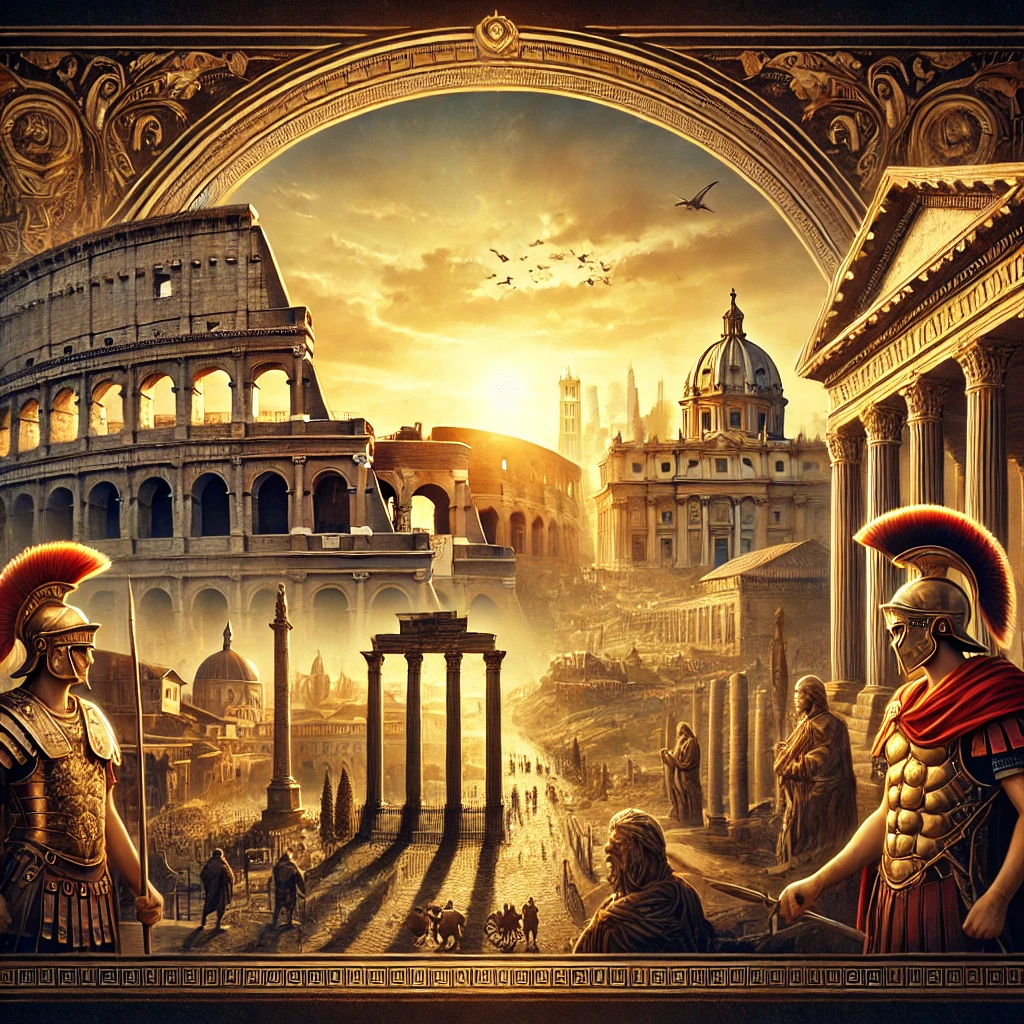
The Roman Empire was one of the most powerful and influential civilizations in history. Spanning over 1,000 years, it shaped modern governance, law, architecture, and culture. From its humble beginnings as a small city-state to its dominance over much of Europe, Africa, and Asia, Rome’s legacy continues to impact the world today.
This article explores the rise, peak, and fall of the Roman Empire, analyzing the key factors that led to its expansion and eventual decline.
According to legend, Rome was founded in 753 BCE by Romulus and Remus, twin brothers raised by a she-wolf. Romulus later became the city’s first king.
Early Rome was ruled by kings, but in 509 BCE, the Romans overthrew their monarchy and established the Roman Republic, a government led by elected officials.
During the Republic, Rome was governed by:
Rome expanded its territory through wars, alliances, and diplomacy. Key events included:
However, political corruption, economic inequality, and military conflicts weakened the Republic.
Julius Caesar, a military general and politician, played a crucial role in ending the Republic. He:
After Caesar’s death, his adopted heir Octavian (Augustus) defeated his enemies and became Rome’s first Emperor, marking the start of the Roman Empire.
Under Emperor Augustus (27 BCE – 14 CE), Rome entered a period of peace and prosperity called the Pax Romana (Roman Peace). Key developments included:
Famous emperors during this period included:
Despite its success, Rome eventually declined due to internal and external problems.
Even after its fall, the Roman Empire influenced the world in many ways:
The Roman Empire was one of history’s greatest civilizations, leaving a lasting impact on government, law, culture, and engineering. From its rise as a Republic to its dominance as an Empire, and finally its fall in 476 CE, Rome’s influence continues to shape the modern world.
While the empire may have collapsed, its legacy endures in modern governance, language, and architecture, proving that Rome was indeed the eternal city.
📌 Key Takeaways:
✅ Rome evolved from a small city-state to a global empire.
✅ The Republic fell due to civil wars and political instability.
✅ The Empire thrived during the Pax Romana but later declined due to corruption and invasions.
✅ Roman law, architecture, and language continue to influence the world today.
When analyzing a stock, one of the first financial indicators you’ll encounter is EPS, or Earnings Per Share. It’s one… Read More
When you look at a stock’s profile on a financial website, one of the first things you’ll see is its… Read More
In the world of open-source software, simplicity and flexibility are often just as important as legal protection. That’s why the… Read More
If you want your software to be open source, but still compatible with commercial use—and not as restrictive as the… Read More
When it comes to open-source software, developers and businesses alike need licenses that balance freedom, legal clarity, and long-term security.… Read More
If you’re working on open-source projects or choosing third-party libraries for your software, understanding software licenses is essential. Among the… Read More