What if tiny robots, smaller than a human cell, could repair damaged organs, fight diseases, or even build microscopic machines? This is the promise of nanorobotics, a cutting-edge field where scientists develop nano-sized robots capable of performing precise tasks at the atomic level.
Nanorobots are already being tested for cancer treatment, targeted drug delivery, and even environmental cleanup. But how do they work? And what challenges must be overcome before they become part of everyday life?
In this article, we’ll explore:
✅ What nanorobots are and how they work ⚙️
✅ How they are being used in medicine to fight diseases 🏥
✅ Their applications in industry, defense, and space exploration 🚀
✅ The ethical and safety concerns of nanotechnology ⚖️
Let’s dive into the microscopic world of nanorobots! 🤯✨
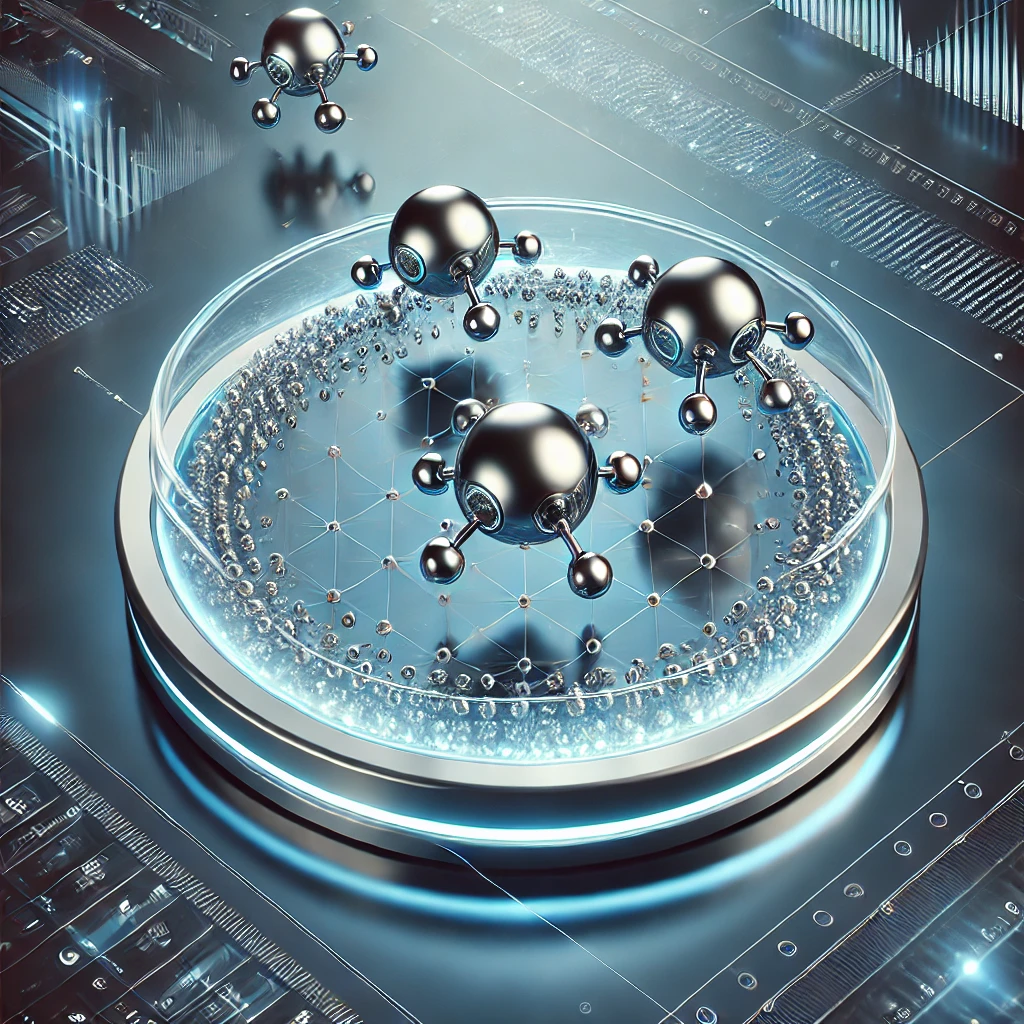
A nanorobot (nanobot) is a microscopic machine, typically ranging from 1 to 100 nanometers in size. To put that into perspective:
🦠 A red blood cell is about 7,000 nanometers wide.
🔬 A nanorobot could be smaller than a virus!
🔹 Nano-Sensors – Detect specific molecules, like cancer cells or toxins.
🔹 Nano-Actuators – Perform actions, such as cutting DNA or delivering drugs.
🔹 Self-Assembly – Some nanobots can build themselves at the molecular level.
🔹 External Control – Scientists can guide nanobots using magnetic fields, ultrasound, or chemical signals.
📌 Fun Fact: The idea of nanorobots was first proposed by physicist Richard Feynman in 1959!
The most exciting use of nanorobots is in healthcare, where they could revolutionize how we treat diseases.
✔️ Traditional chemotherapy damages healthy cells, but nanobots can deliver drugs only to cancer cells, reducing side effects.
✔️ Scientists have developed DNA-based nanorobots that cut off the blood supply to tumors, killing them without harming healthy tissue.
📌 Breakthrough: In 2023, researchers successfully tested nanobots that can seek out and destroy cancer cells in mice! 🧪
✔️ Nanobots could repair damaged neurons, potentially curing paralysis or brain injuries.
✔️ They might one day regrow human organs at the cellular level.
📌 Future Potential: Could nanorobots reverse aging by repairing damaged DNA? Scientists are exploring this!
✔️ Nanorobots can identify and destroy antibiotic-resistant bacteria.
✔️ Some nanobots mimic white blood cells, helping the immune system fight infections faster.
📌 Could nanorobots replace antibiotics in the future? Some experts think so!
Nanotechnology isn’t just for medicine—it’s being used in manufacturing, electronics, and even space exploration!
✔️ Scientists are developing materials that repair themselves using nanobots.
✔️ Imagine a car that fixes its own scratches or a bridge that repairs cracks automatically!
📌 Future Vision: Self-repairing buildings and indestructible materials could become common in the next few decades.
✔️ Nanobots can break down toxic waste and remove pollutants from water.
✔️ Some nanorobots are designed to capture carbon dioxide, helping fight climate change.
📌 Could nanotechnology solve the plastic pollution crisis? Scientists are developing nanobots to break down plastic at the molecular level!
✔️ NASA is researching nanobots that could repair spacecraft during long missions.
✔️ Microscopic nanobots could mine asteroids for valuable resources.
📌 Future Idea: Could we send swarms of nanorobots to explore planets like Mars? 🤯
Despite their potential, nanorobots face major obstacles before they become widely available.
✔️ Since nanorobots are too small for wires or batteries, scientists use external magnetic fields or chemicals to control them.
✔️ More research is needed to ensure they move precisely to their target.
📌 Challenge: How do we make sure nanobots don’t go off-course and harm healthy tissue?
✔️ Could nanobots be used for illegal purposes, such as surveillance or biological weapons?
✔️ Could they accidentally mutate cells or cause unintended genetic changes?
📌 Solution: Governments are working on nanotechnology regulations to prevent misuse.
✔️ Currently, nanobots are expensive to produce, making them inaccessible for most people.
✔️ Scientists are exploring cheaper, scalable methods to mass-produce nanorobots.
📌 Breakthrough Needed: Once nanobots can be 3D-printed at the atomic level, they could become affordable!
With rapid advancements, nanorobotics could transform society within the next few decades.
| Year | Predicted Nanobot Development |
|---|---|
| 2025–2030 | Nanobots used for targeted drug delivery in cancer treatments. |
| 2030–2040 | Nanobots that repair damaged tissues & regrow organs. |
| 2040–2050 | Self-repairing materials and nanobots in space exploration. |
| 2050+ | Fully integrated nanorobots inside the human body, extending lifespan and enhancing health. |
📌 Could nanorobots one day make humans immune to all diseases? Some experts believe it’s possible!
Nanorobotics is one of the most exciting frontiers in science, with the potential to revolutionize medicine, technology, and industry. From fighting cancer to self-repairing materials, these microscopic machines could reshape the world in ways we never imagined.
But as with all powerful technologies, nanorobots must be developed responsibly, ensuring they are used for the benefit of humanity.
🌟 Could nanorobots be the key to curing all diseases and extending human life? The future is closer than we think! 🌟
📌 Key Takeaways:
✅ Nanorobots are microscopic machines used in medicine, industry, and space.
✅ They could revolutionize cancer treatment, organ repair, and environmental cleanup.
✅ Challenges include precision control, cost, and ethical concerns.
✅ Future nanorobots may repair DNA, extend human lifespan, and explore space.
🔥 Would you trust nanobots inside your body to repair cells or fight diseases? 🔥
When analyzing a stock, one of the first financial indicators you’ll encounter is EPS, or Earnings Per Share. It’s one… Read More
When you look at a stock’s profile on a financial website, one of the first things you’ll see is its… Read More
In the world of open-source software, simplicity and flexibility are often just as important as legal protection. That’s why the… Read More
If you want your software to be open source, but still compatible with commercial use—and not as restrictive as the… Read More
When it comes to open-source software, developers and businesses alike need licenses that balance freedom, legal clarity, and long-term security.… Read More
If you’re working on open-source projects or choosing third-party libraries for your software, understanding software licenses is essential. Among the… Read More